I built this for the students I taught
I taught the students this page is about. Five years of watching kids who could do the math get placed into remedial anyway.
Five years of watching the same thing happen
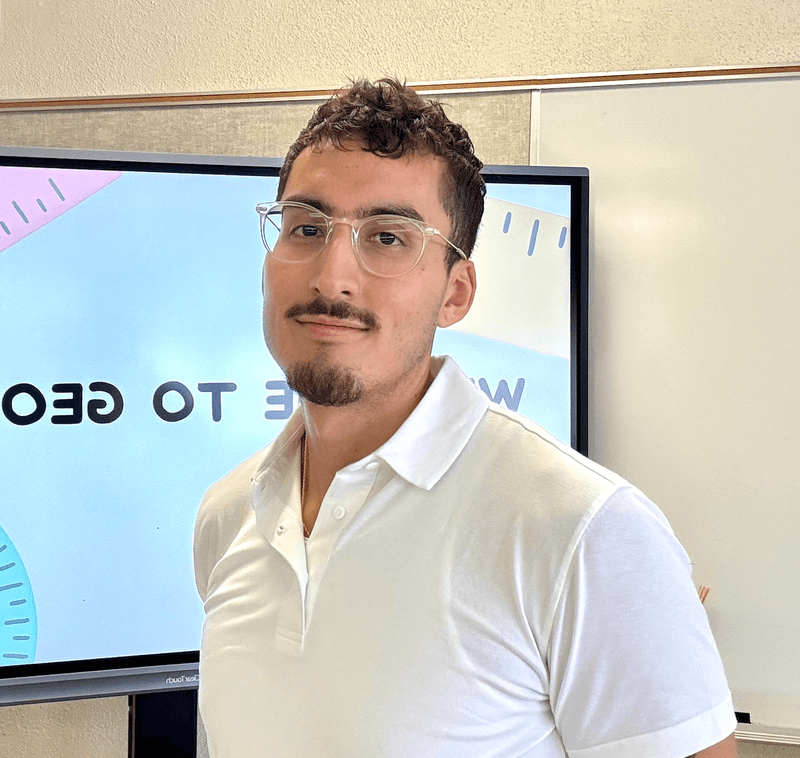
I'm Mr.O. I taught high school math in East Houston for five years, and every spring I watched the same thing happen. A kid who worked hard all year, who I knew could do the math, would sit down for a college placement test and still land in remedial.
That was not one student. Over five years it was hundreds of them, and it made me start asking what I was missing. What they had in common was not that they had failed to learn the math. It was that their thinking was breaking down, and for each of them it was breaking down somewhere different.
Part of it is a mismatch nobody warns them about. On STAAR they have a graphing calculator, a reference sheet, and four years of practice with a familiar format. On the TSIA2 they get a basic calculator and a test that adapts to them, which means it finds the edge of what they know and keeps them there. That is a different experience, and it deserves different preparation.
I needed a resource that did more than tell students whether an answer was right or wrong. It needed to reflect the TSIA2 and reveal the exact point where their thinking started to slip. When I could not find it, I decided to build it.
Why wrong answers are the interesting part
When a student picks C instead of A, C is not random. It came from somewhere.
- RISE OVER RUN, INVERTED
The student divides the run by the rise. Same two numbers, reciprocal answer.
- ONE STEP TOO EARLY
The student solves correctly, then hands in the intermediate result.
- A SECOND INCREASE, NOT A REVERSAL
Asked for the original price, the student adds another twenty percent instead of undoing the first one.
Three different problems, three different fixes. A score of 938 tells you none of them.
So that is what I built. Every question in UnpackMath has its wrong answers written on purpose, each one traced to a specific misconception. 475 of them across 1,124 items. When a student misses something, the platform can say what the likely thinking was instead of just marking it red.
Three people, one missing conversation
There are three people who need that information, and usually none of them get it.
The student
Finds out they are behind when it is too late to act on it.
The teacher
Thirty kids, thirty wrong answers, no time to reverse engineer any of them.
The parent
Gets a number and no idea what to do with it. Sometimes not in their language.
You do not have to know the math to help with the math. You just have to know what to ask. That is the whole idea, and it is the part that does not exist anywhere else.
One teacher, one company, one product
UnpackMath is one person. I write the curriculum, I build the product, I answer the email.
- Things ship slower than they would with a funded team.
- If you write in, you get me, not a support queue.
- Nothing gets added because a growth team wanted a number to move.
- The person deciding what goes into this has graded the papers.
If you are a teacher and you want to talk shop, hello@unpackmath.com reaches me directly.